When Carrier Offload for Businesses Pays Off

If customers, guests, patients, students, or employees spend meaningful time at your location, your Wi-Fi may be doing more than delivering internet access. Carrier offload for businesses creates a path to carry trusted mobile-carrier traffic over qualified Wi-Fi networks - and potentially turn an operating expense you already fund into recurring revenue. The first question is practical: does your location have the traffic, dwell time, coverage, and network control a carrier needs?
Wi-Fi Is Becoming a Telecommunications Asset
For years, business Wi-Fi has lived in the customer-service budget. A coffee shop offers it to encourage longer visits. A hotel provides it because guests expect it. A hospital, university, or office depends on it for daily operations. The network is necessary, but it is generally treated as a cost center.
That assumption is changing. Mobile carriers face enormous demand in the places where people gather. Cellular capacity can become constrained in a busy convention hall, a retail center on a Saturday afternoon, a packed stadium, or a medical campus with thousands of connected devices. Building more cell infrastructure everywhere is expensive, slow, and not always practical.
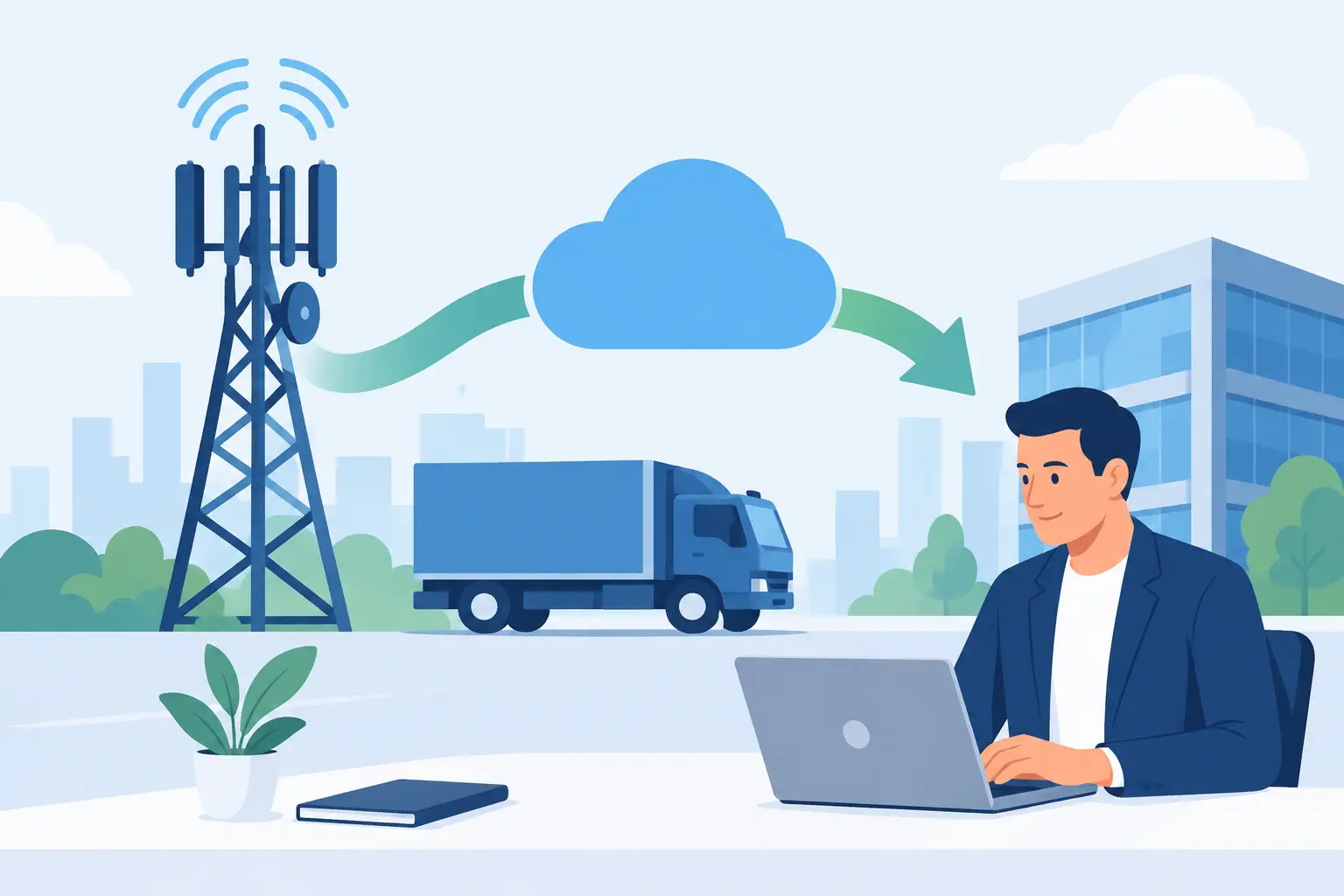
Carrier offload gives carriers another route. Rather than requiring every device to remain on the cellular network, approved traffic can move to a carrier-grade Wi-Fi network at a participating venue. Think of the cellular network as a highway. When a major exit leads to a crowded destination, carrier offload directs some traffic onto a well-built local road, reducing pressure on the highway while still getting people where they need to go.
For the venue, that local road already exists. The opportunity is to determine whether it can be upgraded, managed, and commercially connected to support carrier traffic.
How Carrier Offload for Businesses Works
The customer experience is designed to feel familiar. A mobile subscriber enters a participating venue, and their device identifies an authorized Wi-Fi network. With carrier-supported authentication technology such as WiFi Passpoint, the device can connect securely without forcing the user through a portal, asking them to re-enter credentials, or creating another login step.
Behind that simple connection is a more demanding technical and commercial framework. The Wi-Fi network must have adequate coverage in the areas people actually use, enough backhaul capacity, reliable equipment, proper security controls, and a configuration that supports carrier requirements. The venue operator also needs authority over the network or a workable agreement with the party that does.
Once a location qualifies and is connected through the right technology and carrier partnerships, the carrier can use that Wi-Fi capacity for eligible subscriber traffic. Compensation structures vary. Revenue depends on factors such as traffic value, carrier demand, location characteristics, network performance, and the terms of the commercial program. It is not a promise that every Wi-Fi network will produce the same return.
That distinction matters. Carrier offload is not simply putting a new name on guest Wi-Fi. It is participation in decentralized wireless infrastructure, where privately owned locations help deliver the connectivity people expect.
What Makes a Location Valuable to Carriers?
Square footage alone is not the deciding factor. A smaller café beside a transit hub may be more attractive than a larger but lightly used building. Carriers are looking for places where their subscribers are present, remain for a while, and benefit from a dependable Wi-Fi connection.
High-value locations often share four traits: consistent foot traffic, meaningful dwell time, usable Wi-Fi coverage, and a strategic setting. A gym has repeat members who stay for an hour. A hotel has guests who use multiple devices over extended periods. A hospital has patients, visitors, clinicians, and staff throughout the day. A retail center may see concentrated demand during peak shopping periods.
The surrounding area can matter just as much as the venue itself. A business near a congested cellular corridor, a dense downtown block, a transportation center, or a large event destination may offer greater carrier value than an otherwise similar location elsewhere. Carriers plan around real demand patterns, not generic business categories.
Locations commonly worth evaluating include:
Hotels, resorts, and conference properties
Coffee shops, restaurants, and food halls
Fitness centers, entertainment venues, and stadiums
Hospitals, medical campuses, and senior living communities
Universities, schools, libraries, and religious gathering spaces
Retail centers, grocery stores, and large-format stores
Offices, coworking sites, apartments, and mixed-use properties
Transit-adjacent venues, event spaces, and public gathering places
A single location can qualify, but multi-location operators may have a particularly strong opportunity. A portfolio creates broader geographic coverage, repeatable deployment potential, and a more meaningful conversation with infrastructure partners.
The Business Case Goes Beyond a New Revenue Stream
Recurring revenue is the direct appeal. If a location meets program requirements, carrier offload can create income from infrastructure the business already maintains. That changes the internal conversation about Wi-Fi from, “What does this cost us?” to, “What value can this network produce?”
The operational benefits can be just as relevant. Carrier-grade network improvements may strengthen coverage and capacity for the people already using the property. At a hotel, that can support guest satisfaction. At an office, it can reduce connectivity friction for employees and visitors. At a venue, it can help keep customers connected when cellular demand rises.
There is also an asset-value argument. Commercial properties are increasingly evaluated through the quality of their digital infrastructure. Reliable connectivity affects tenant appeal, visitor experience, operational resilience, and the ability to support future services. A well-managed Wi-Fi network is no longer background technology. It is part of the property’s utility profile.
Still, the business case should be evaluated honestly. A low-traffic site with limited dwell time may not create enough demand to justify upgrades. A property where a third party controls the network may need contractual work before it can participate. Older equipment, poor coverage, or insufficient internet capacity can require investment. Qualification identifies these realities early, before an operator spends time chasing a program that does not fit.
Start With Network and Location Facts
You do not need to be a telecommunications expert to assess the opportunity. You do need a clear picture of the location. A useful review considers who visits, when demand peaks, how long people remain onsite, where Wi-Fi is available, and whether the business controls the network equipment and internet connection.
For a property owner, the first challenge is often organizational rather than technical. The IT team may manage access points, a managed service provider may control the network, and a tenant may own the internet service. Clarifying those roles is essential. Carrier participation requires an accountable path to upgrade, monitor, and operate the network to the required standard.
It also helps to think in zones rather than averages. A convention hotel may have excellent coverage in guest rooms but weak service in ballrooms where thousands of devices gather. A shopping center may have strong Wi-Fi inside stores but no useful coverage in common areas. The places where people dwell and demand accumulates are the places that carry the most weight.
WiFiRevenueCheck evaluates this real-world picture: location type, traffic patterns, dwell time, existing coverage, network control, and the strategic value of the surrounding market. That is a more useful starting point than assuming every business with an internet connection is automatically ready for carrier traffic.
The Future of Decentralized Networks Is Local
The wireless industry is moving toward a model that combines national carrier networks with trusted, high-performing infrastructure at the places people already spend time. Businesses and property owners can be active participants in that shift. They supply something carriers cannot replicate quickly at every address: established locations with power, connectivity, people, and a reason to return.
The right next step is not to replace a functioning Wi-Fi network for the sake of a trend. It is to find out whether your location sits where mobile demand and business opportunity meet. If it does, the Wi-Fi you already pay to operate may be ready to earn its place as a revenue-producing asset.
Comments